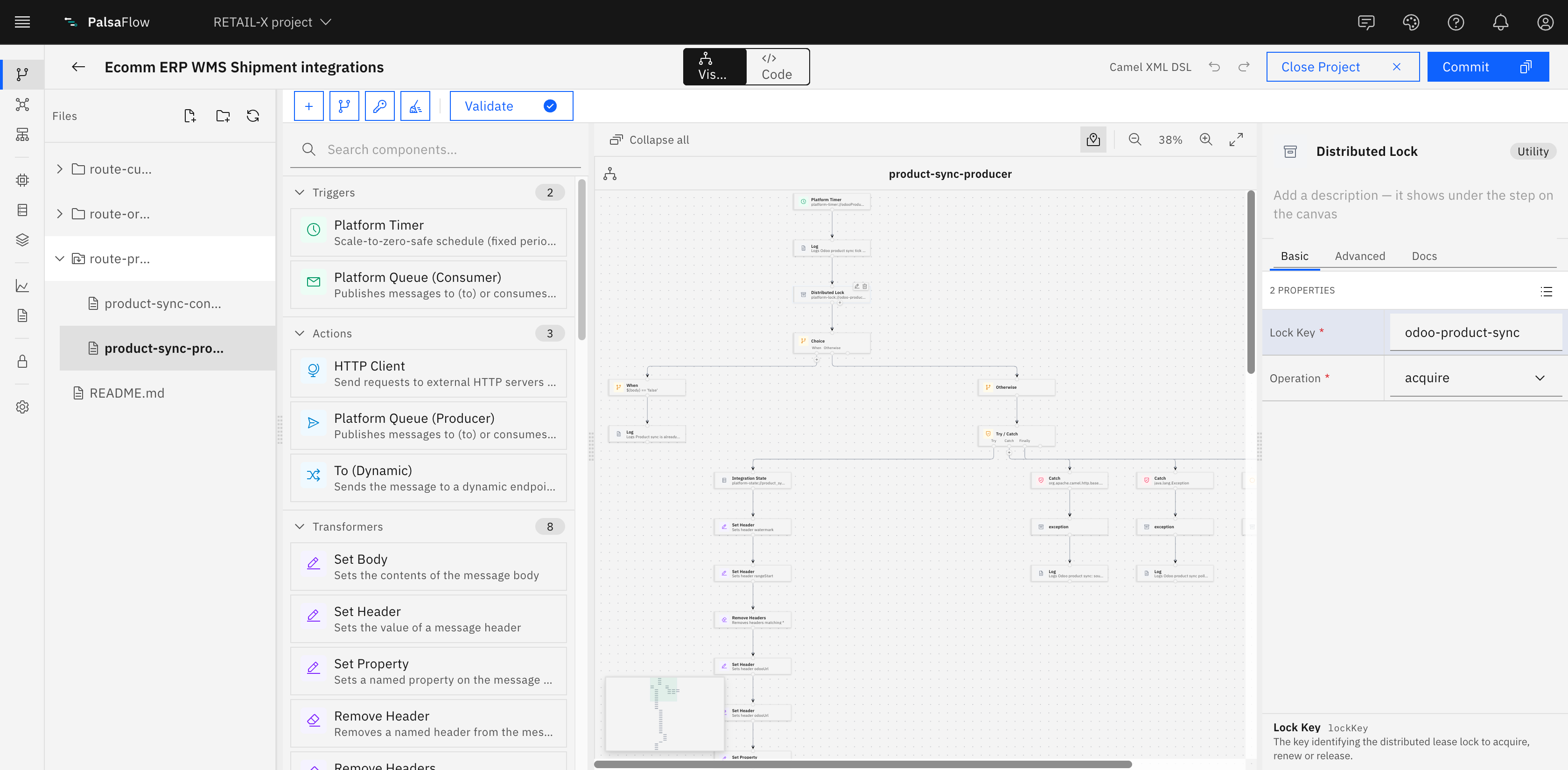
Visual designer — build routes from EIP components, with the Camel XML always one click away.
PalsaFlow connects the applications your business runs on, so processes like order-to-delivery run end to end, automatically. Built on Apache Camel and delivered as a fully managed iPaaS, it sits between heavyweight enterprise suites and opinionated workflow tools: design integrations from reusable components and proven Enterprise Integration Patterns, deploy them to a managed runtime, and operate everything from a single workspace.
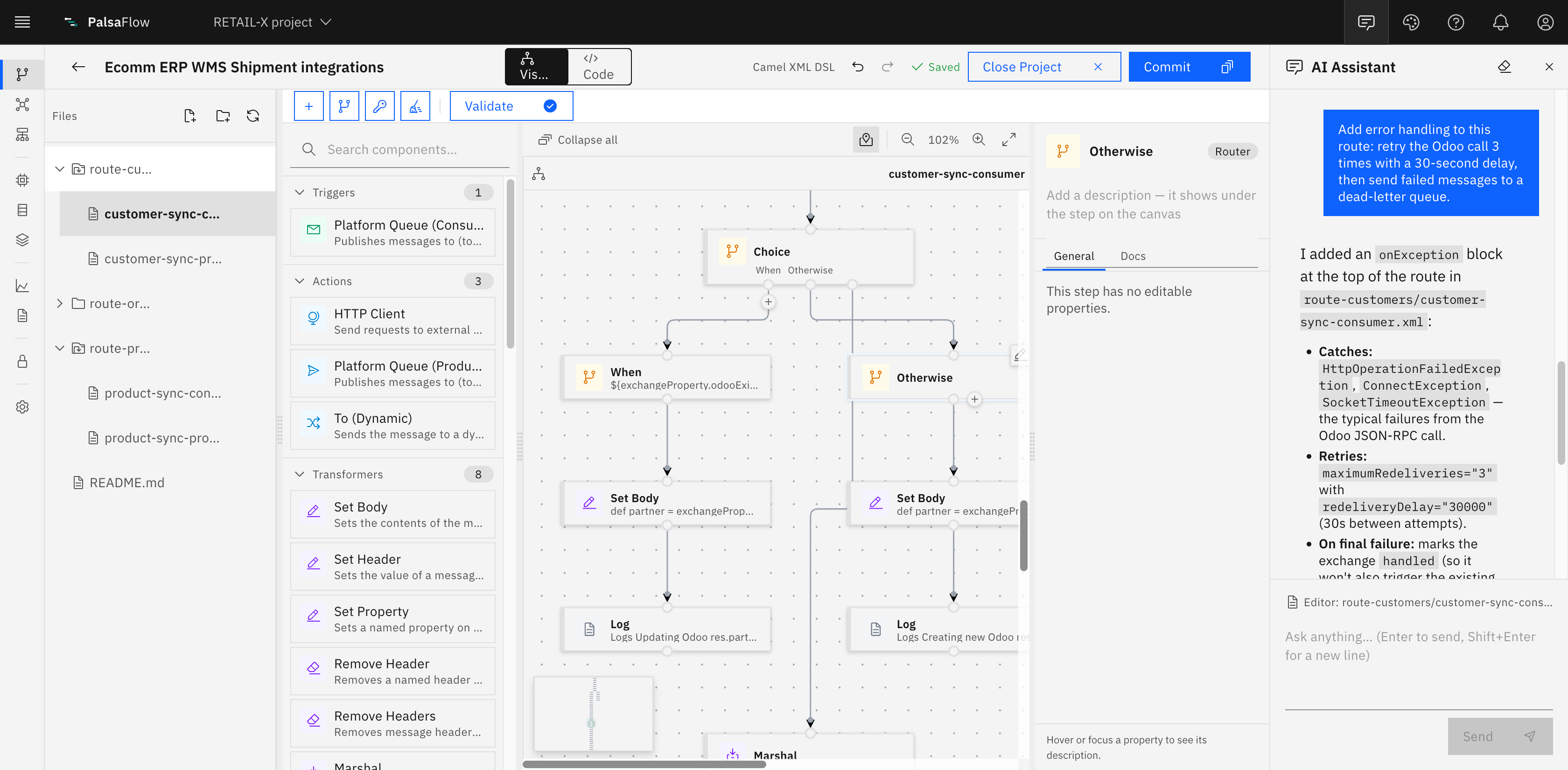
AI turns requirements into working integrations, with your team in the loop on every change.
PalsaFlow brings its own managed runtime: no platform to set up or operate before your first integration goes live.
Coming next: agentic operations. AI agents watch the runtime, analyse failures as they happen and propose fixes, and your team approves every change.
After years of delivering enterprise software, in retail and beyond, the same gaps kept showing up on every project.
Teams still build on-prem integrations by hand in traditional programming languages, or carry the weight of heavyweight integration suites. Connecting your systems should be visual data orchestration — not glue code and servers to babysit.
For every new project the same adapters and connectors get rebuilt almost from zero. Integrations should be reusable — assembled from components you build once and share across projects, not rewritten each time.
Running and operating integrations usually needs its own infrastructure and ops effort. The place where you design should also be where you deploy, run and manage — day one and day two.
Create integration flows in a visual designer. Connect components, configure routes, and model complex integration scenarios — without losing control over the underlying implementation or the Apache Camel routes it generates.
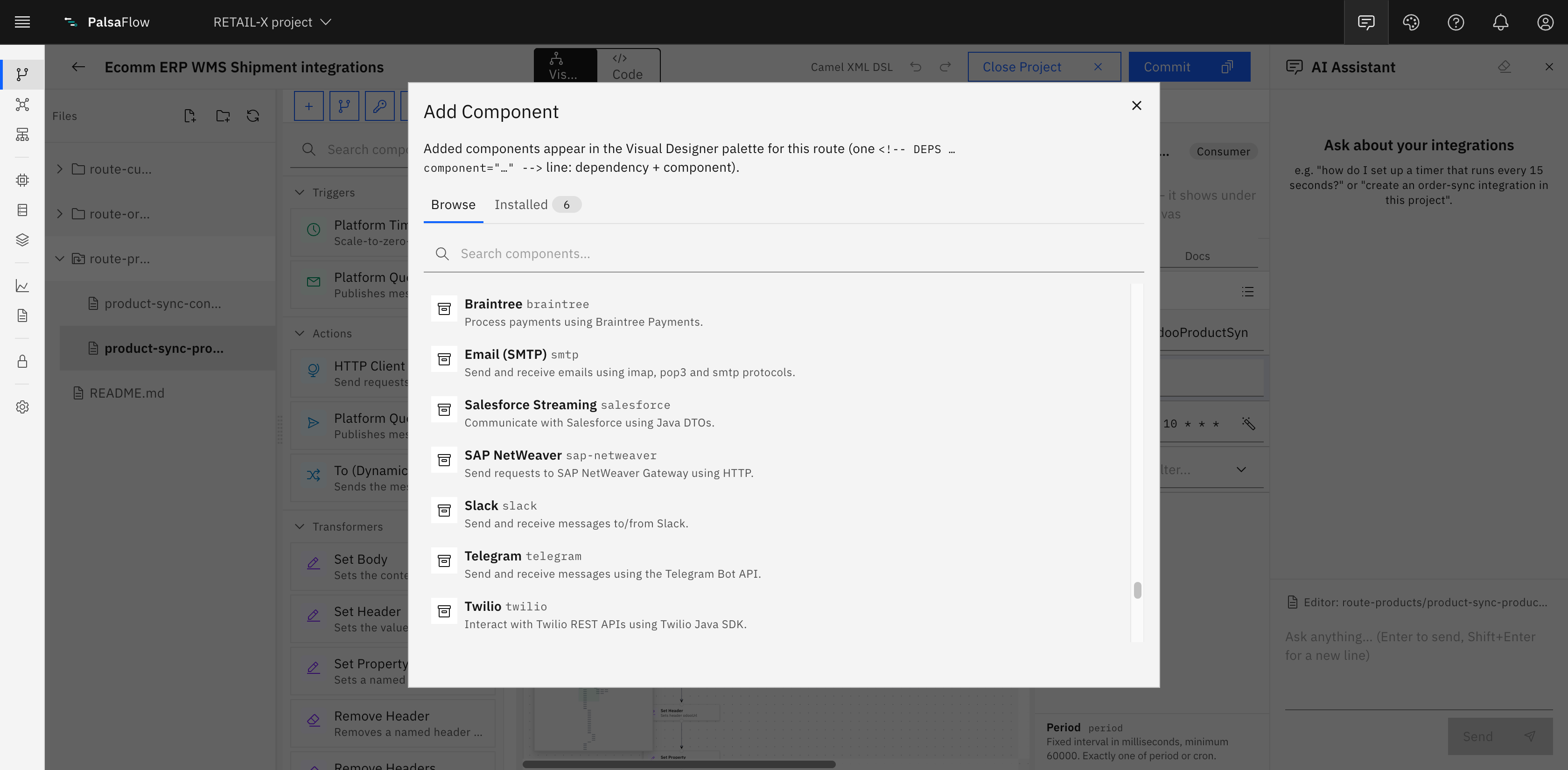
Build once, reuse everywhere. Accelerate delivery with reusable components and standardized Enterprise Integration Patterns, and assemble modular integration solutions instead of reinventing the wheel for every project.
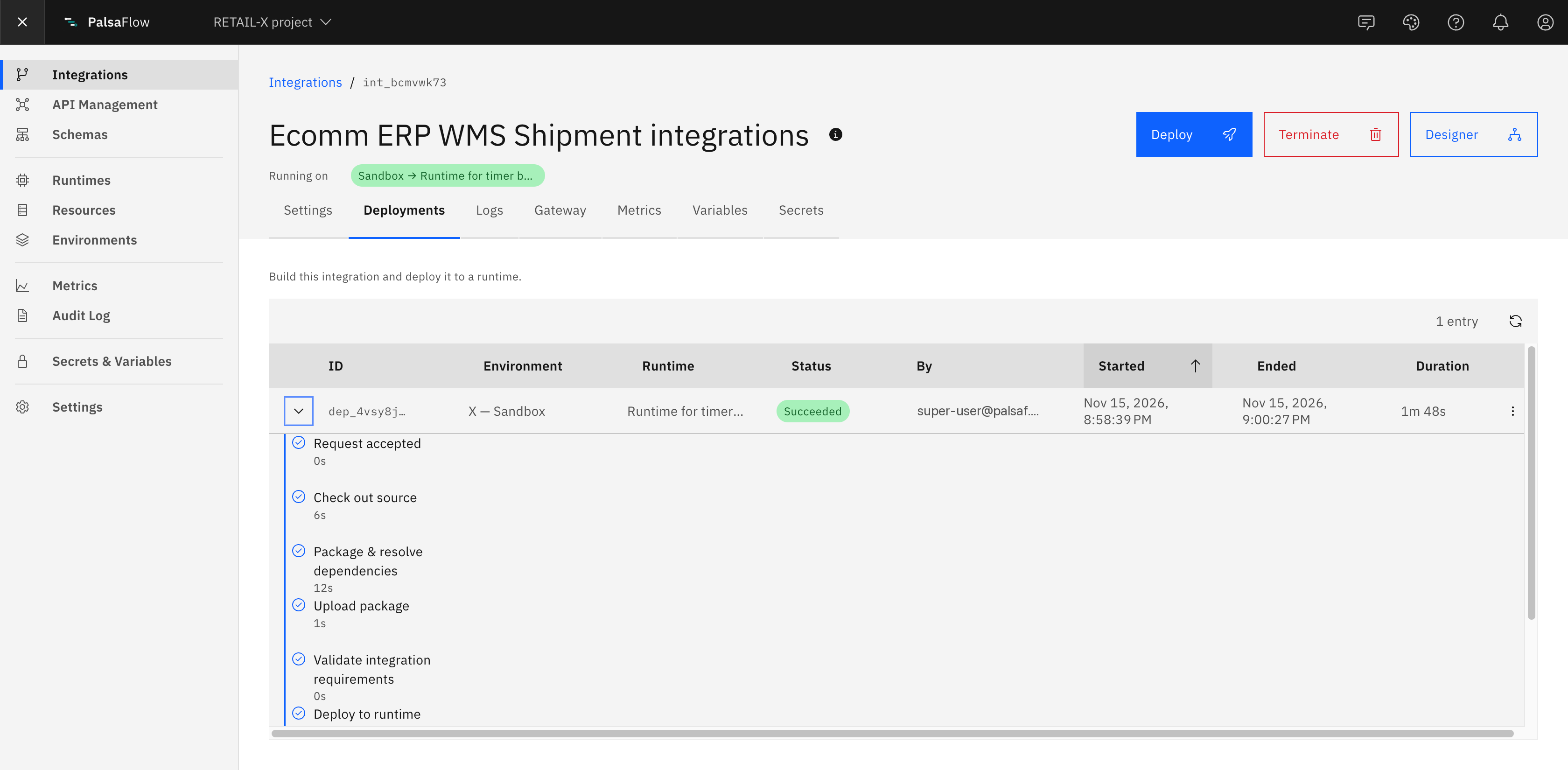
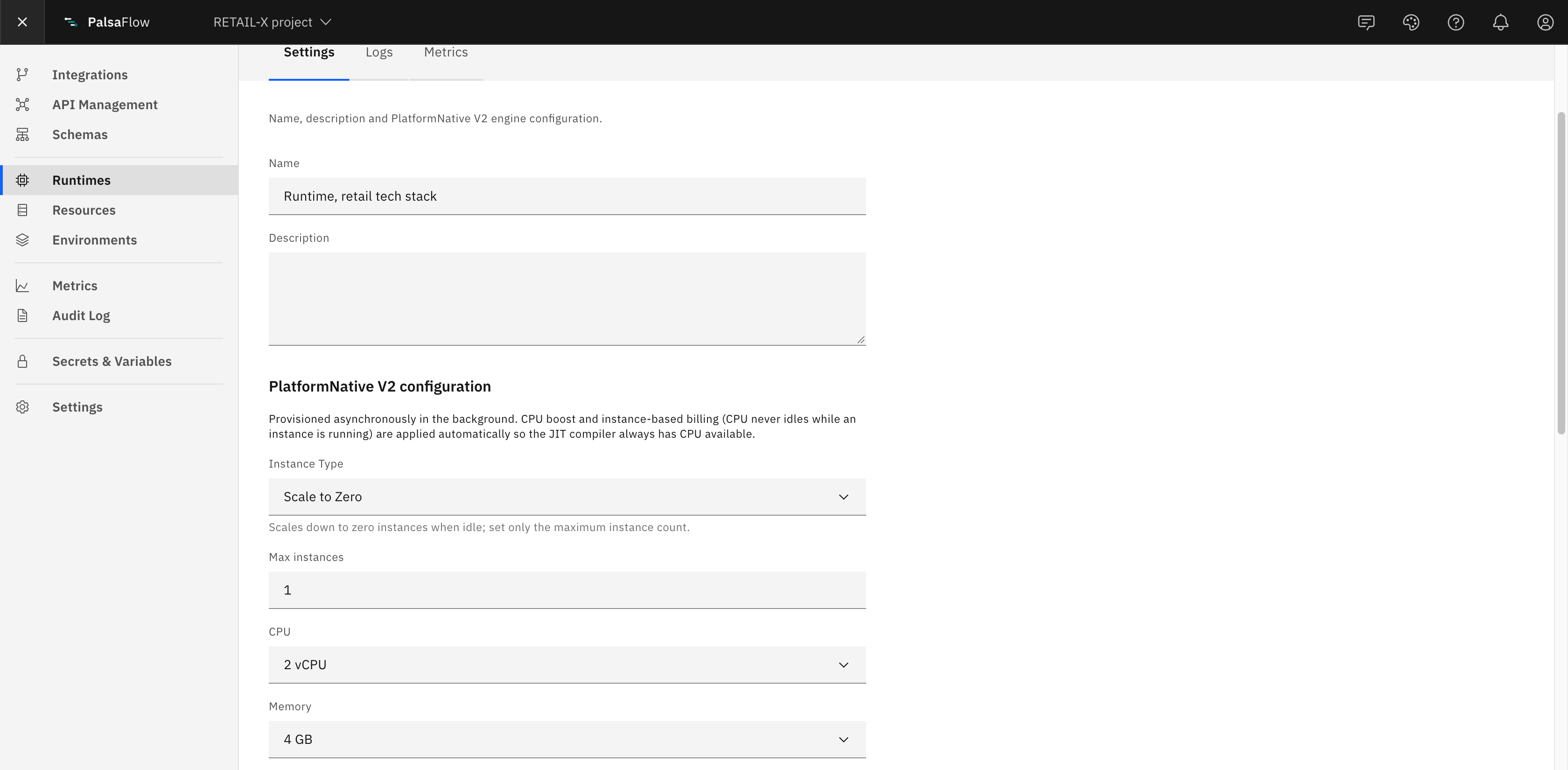
Deploy and execute with confidence on a managed runtime powered by Apache Camel. Focus on integration logic while PalsaFlow handles the execution environment — with nothing to install. Run flows that scale to zero when idle, or on always-on runtime engines for steady workloads.
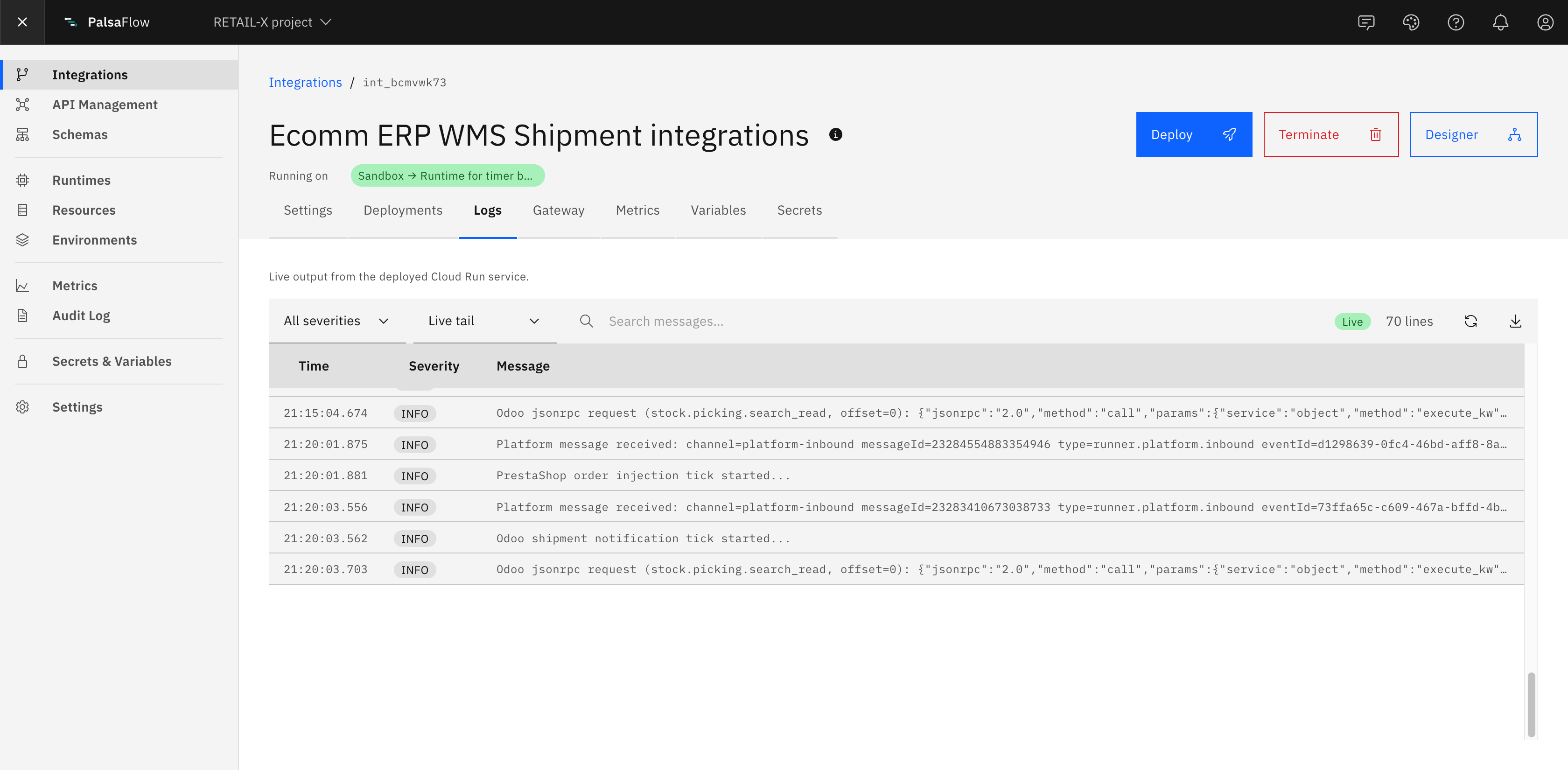
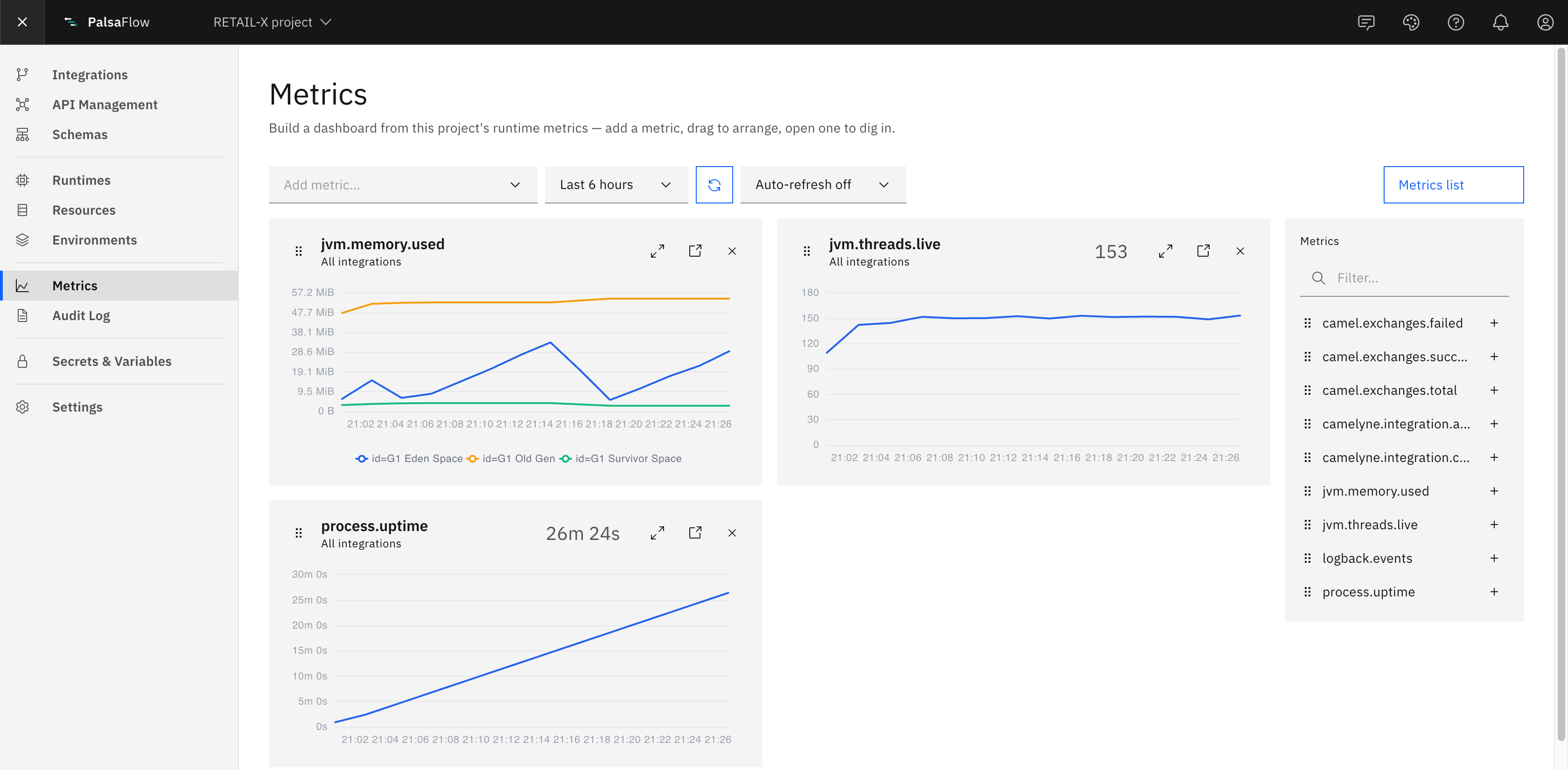
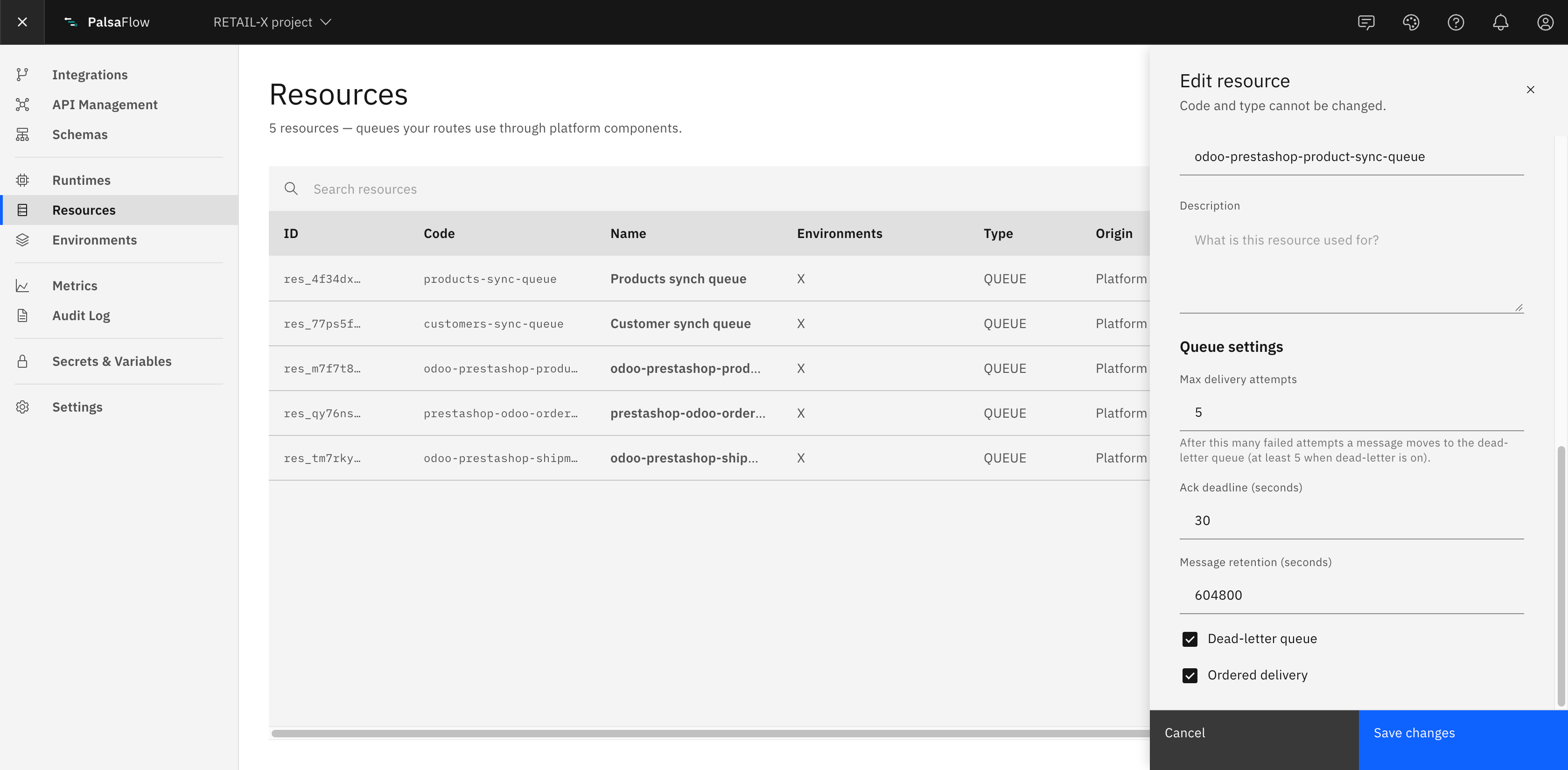
Manage your integration landscape from one place. Monitor executions, inspect logs and tracing, and understand how your flows behave — backed by a built-in API gateway, RBAC and secret management for enterprise governance.
PalsaFlow is not a traditional integration tool with a chatbot added on. AI already does real work on the platform, while the message path itself stays deterministic — high-volume flows run on Apache Camel, not on a model.
PalsaFlow exists for one goal — give integration projects, and in time AI-driven transformation, one manageable platform to be built, run and operated on effectively.
Tell us which systems you need to connect. We'll walk you through how the integration is designed, deployed and operated on PalsaFlow. What you see here is the starting point: the platform is moving fast, with new capabilities shipping continuously.